

Qi Lu Evening News · Qi Lu One Point — By Feng Zihan
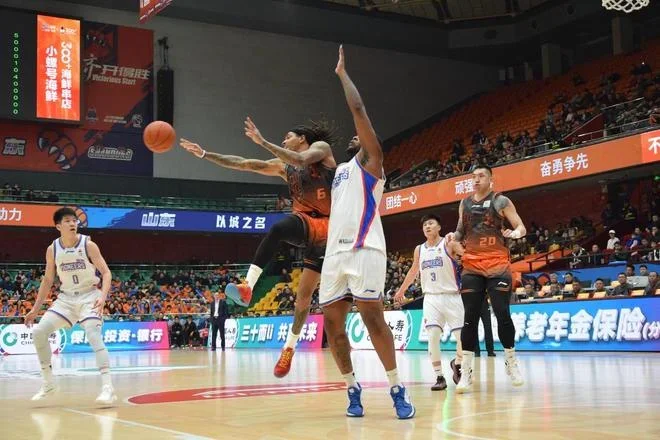
“Some players today are not professional at all!” A visibly furious Qiu Biao, head coach of the Shandong Hi-Speed men’s basketball team, exploded after a crushing defeat to Shanghai on the night of the 9th, ending their season. Even facing a barrage of media microphones, the normally mild-mannered coach couldn’t contain his anger and unleashed an expletive.
Who was Qiu Biao targeting? The answer lies in that failed do-or-die game.
In the second game of the CBA playoff quarterfinals against the Shanghai Sharks, Shandong collapsed in a humiliating defeat. Throughout the game, the three foreign players — Chris, Pursell, and Jones — collectively scored a mere three points. Even the barely passable Johnson could not lift the total of all four imports above that of Shanghai’s big man, Lofton, alone.
This dismal performance directly confirmed Qiu Biao’s post-game fury: some imports lack professional ethics, show no responsibility in crucial moments, and treat the court as a mere formality. This has become a microcosm of the team’s failed foreign player recruitment this season.
This season, due to CBA restrictions on the number of foreign player registrations, teams have been more cautious in their selections. Shandong registered four imports: Chris, Pursell, Johnson, and Jones, plus the first-phase contributor Powell and the late-season “temporary worker” Steele.
Six imports rotated through, but none could shoulder the core responsibility.
During the regular season, the foreign players were plagued by inconsistency and frequent issues: Chris, the interior mainstay, averaged 19.7 points per game but struggled with emotional control, drawing technical fouls and clashing with referees, disrupting the team’s rhythm. Pursell proved to be a “knife” — scoring zero points in consecutive playoff games. Johnson had sharp drives but a glaring weakness in outside shooting. Jones never managed to integrate into the team’s system, making little impact on either offense or defense.
Across the CBA, foreign players remain the driving force in deciding game outcomes. Top teams all boast one or two high-quality, dedicated, and system-fitting core imports. This season, Shandong clearly failed to find the most suitable foreign players.
Over the past two seasons, the team has brought in about ten foreign players, yet has never found a cornerstone import like Tu Ke or Jie Te from previous years. Frequent changes have led to insufficient lineup chemistry, an unstable tactical system, and a persistent lack of synergy between imports and domestic players, as well as among the imports themselves. Some imports may have impressive stats on paper, but they are inefficient, fail to adapt to the team’s style, and lack the fighting spirit for tough games.
Determining which imports to keep and which to let go — or whether to start completely from scratch — is a major challenge for the Shandong Hi-Speed front office.
Reports suggest that next season, the CBA will revert to a three-foreign-player policy while tightening registration slots and limiting replacement frequency, with a stepped salary cap. This drastically reduces the margin for trial and error in recruitment. Precision in signing and building a stable foreign player combination will be the only path for the team to maintain competitiveness.
This season’s lackluster performance from foreign players was a major reason Shandong stopped at the quarterfinals, exposing deep flaws in the team’s management of imports and recruitment strategy. Only by making precise moves during the offseason to assemble a group of imports with the right attitude, high skill, and system fit can the team break free from its struggles and rebuild competitiveness next season.
